Traditional Taijiquan. Taught as a physical skill.
Learn a traditional craft that develops stability, strength, coordination, and whole-body connection. Train at an intensity suited to your ability, through structured solo exercises and interactive partner work.
Kingston Chen Taijiquan Practice Group
With So Many Ways to Move, Why Taijiquan?
A traditional craft with accessible beginnings and considerable depth.
Portability
Taijiquan requires no special equipment or dedicated facilities. It is a lifelong practice. You can practice almost anywhere.
Adaptable Across Ages
Taijiquan can be practiced by people of different ages. Its training can range from gentle, controlled movement to physically demanding exercises that challenge strength, coordination, and endurance.
Health and Martial Synergies
Taijiquan is both a martial art and a discipline for cultivating physical health. Many of its training methods serve both purposes. For example, the weight-bearing aspect of the practice develops strength and stability in the legs, qualities that are valuable both for managing external pressure in partner practice and for maintaining physical capability as we age.
Not All Taijiquan Is the Same.
Taijiquan encompasses different styles, training methods, and interpretations. Here's what we emphasize in our approach.
Stability Beyond Balance
Balance is often understood as maintaining equilibrium. Our training goes further, emphasizing the ability to preserve one's structure and stability under external pressure. Rather than balancing like a game of Jenga, we seek to develop a root like a sturdy tree. Our line of practice has a uniquely detailed approach to the lower body that cultivates stability.
Methodology
We teach through a concrete, step-by-step methodology rather than relying on abstract principles alone. Each stage of training builds upon the last, giving students a clear path toward developing their skills. Principles explain what we seek to achieve; methodology teaches how to achieve it.
Yin and Yang
Consider these contrasting qualities:
Yin: Slow · Internal · Soft · Defensive · Passive · Reactive
Yang: Fast · External · Hard · Offensive · Active · Proactive
Contrary to the common perception of Tai Chi as a slow, soft, passive, and purely internal martial art, our line of practice emphasizes the development of both Yin and Yang.
We train both sides of Yin and Yang, recognizing that neither is complete without the other.
After all, Taiji (Tai Chi) itself is defined by the interplay of Yin and Yang.
How We Teach
Our training follows a progressive physical methodology that develops the body from the ground up. Each stage builds the specific structure, mechanics, and physical capabilities needed for the next, providing a clear path.
Taijiquan Is a Language of the Body
Principles describe what should happen; methodology provides the path for developing the ability to make it happen.
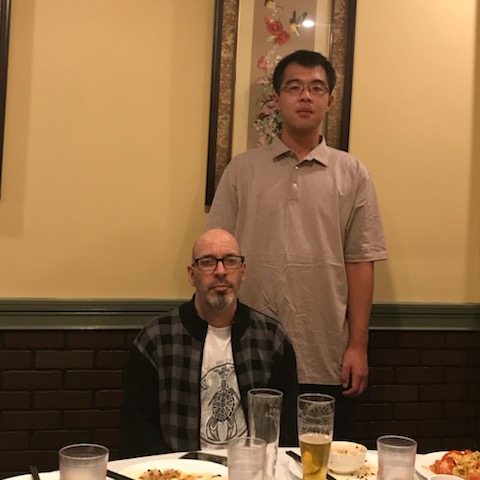
Marin Spivack & Robin Wu
Meet Robin
Robin Wu is a Chen Family Taijiquan practitioner who has trained directly under Marin Spivack as an indoor student/disciple. Marin Spivack is a senior disciple of Master Chen Yu, only son of Chen Zhaokui.
Your First Class
We make starting as straightforward and reassuring as possible. No uniform, no special flexibility, no expectations.
Comfortable clothes and flat shoes. No uniform required.
Basic stance, posture, weight shifting, and movement fundamentals.
This line of Taijiquan can be practiced light or intense, depending if you want a maintenance practice or a developmental practice.
Schedule & Location
Weekly Schedule
Saturdays: 10:30 AM – 12:00 PM
Location
Outdoor Park Location
[Placeholder: Central Park North Lawn, Gate 4 entrance]
Try Your First Class
No long-term commitment or prior experience required. Come experience Chen Family Taijiquan practice for yourself.